 Gatkul
 ChipOS · Narrative
About
Semiconductor talent is built in the lab, not in slide decks. ChipOS is Gatkul's operating layer for students, academicians, and researchers — coordinating design, simulation, PDK-aware exercises, fab process literacy, and validation so programs teach how silicon is actually conceived, built, and tested.
- Design with lineage. RTL, constraints, and review artifacts stay attached — students learn industry-grade continuity, not one-off homework folders.
- Fab-aware curricula. Process modules connect classroom theory to lithography, deposition, yield, and packaging — manufacturing literacy without pretending to be a foundry terminal.
- Research-grade collaboration. Multi-advisor projects, export-aware access, and shared evidence — ambition without file-drop archaeology after every review.
ChipOS · Design to ecosystem
From transistor literacy to a collaborative silicon commons
We envision semiconductor education not as isolated tool training but as a governed commons — where students sketch RTL beside professors, researchers stress-test PDK assumptions with industry mentors, and entrepreneurs prototype packaging ideas before a single mask set ships. ChipOS is the operating layer that keeps design lineage, fab literacy, and partnership handoffs on one inspectable thread.
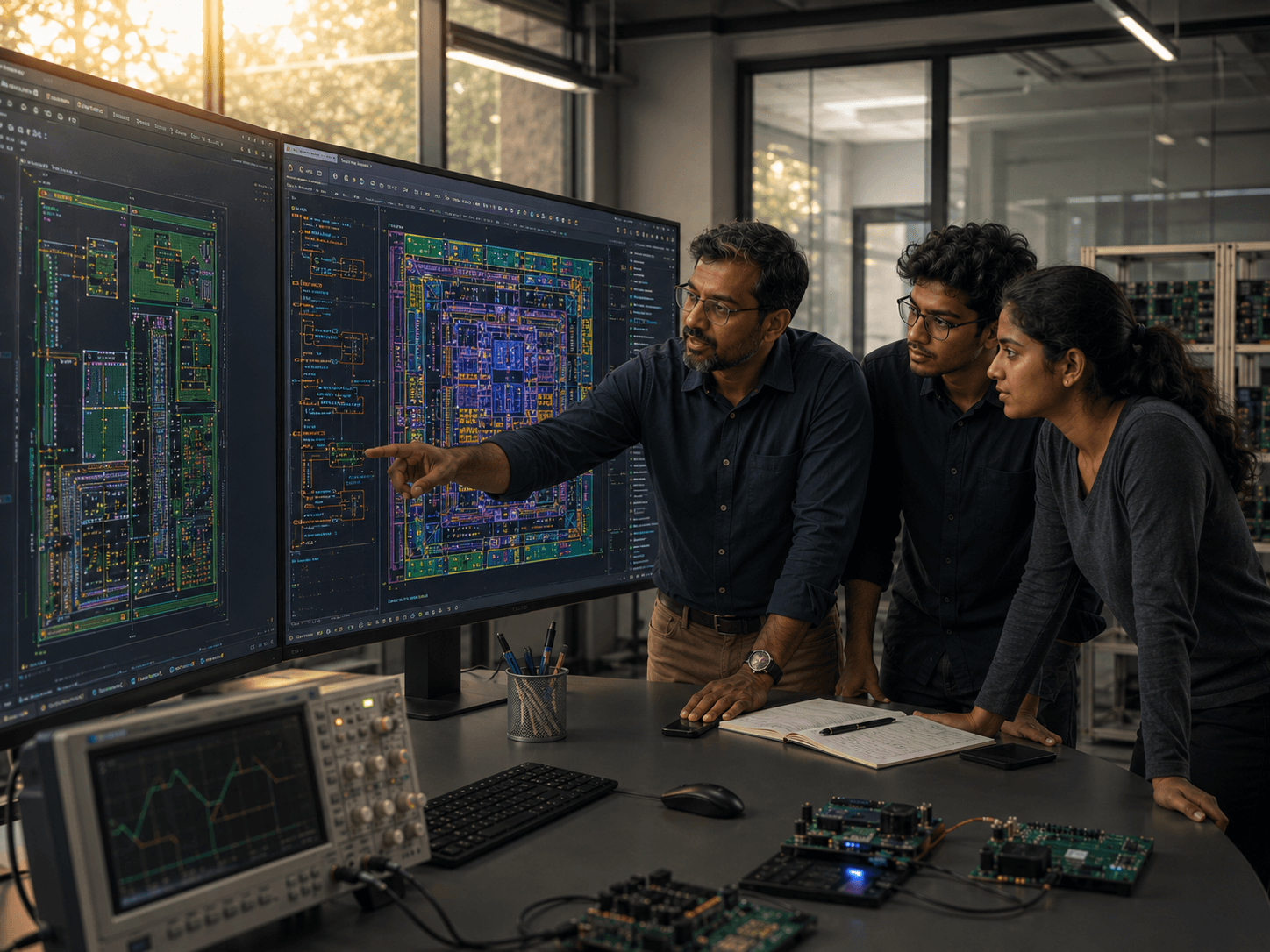
Beat 9 · Design studio
The first movement is disciplined design — hierarchy, constraints, and review artifacts students can defend in viva and portfolio screens. ChipOS keeps RTL, schematics, and sign-off notes attached so homework folders become engineering lineage.
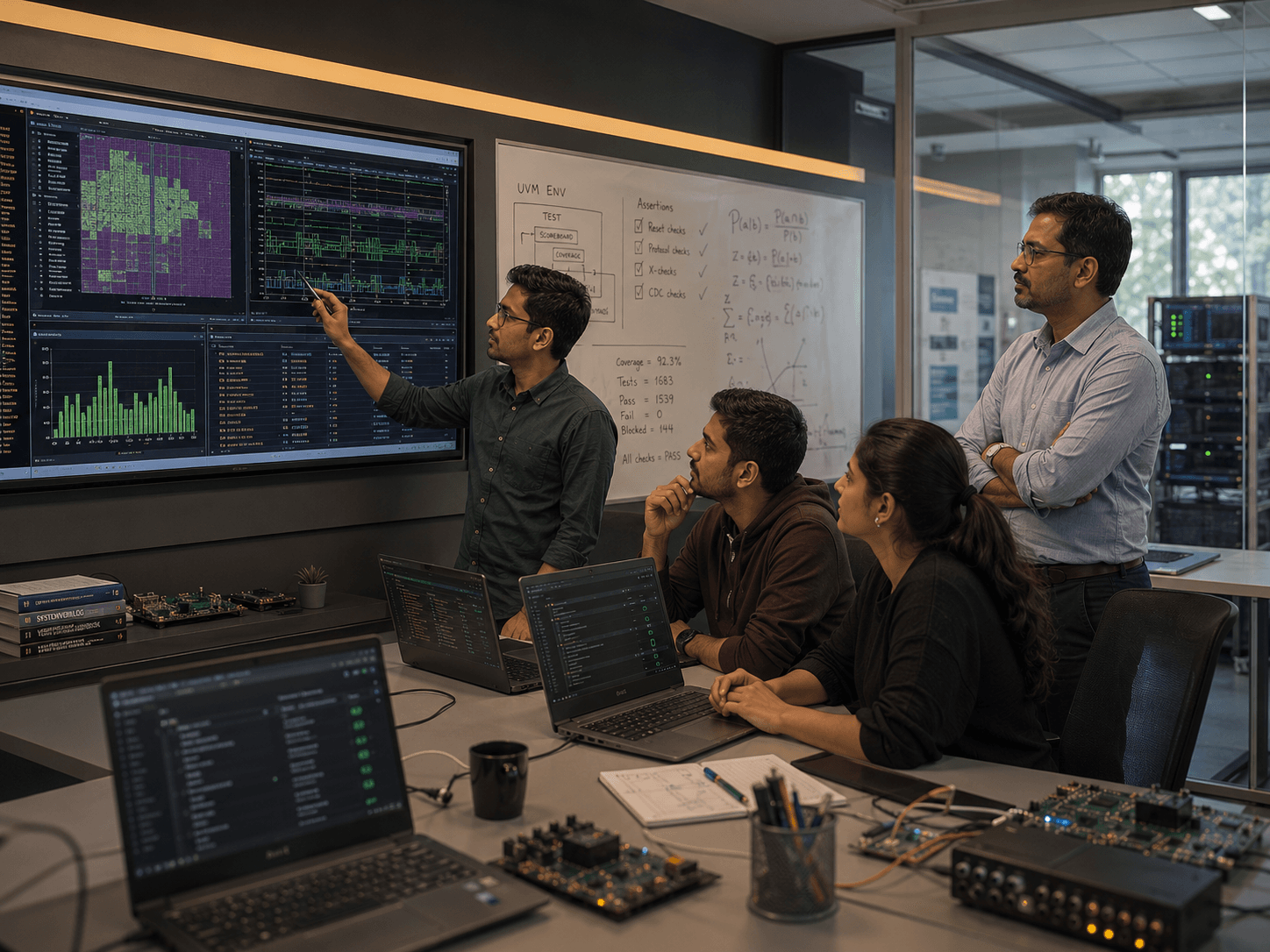
Beat 10 · Simulation & verification
Verification is where ambition meets evidence — functional, timing, and power flows queued with inspectable trails. Graders, advisors, and industry reviewers read the same job history, not screenshots scattered across chats.
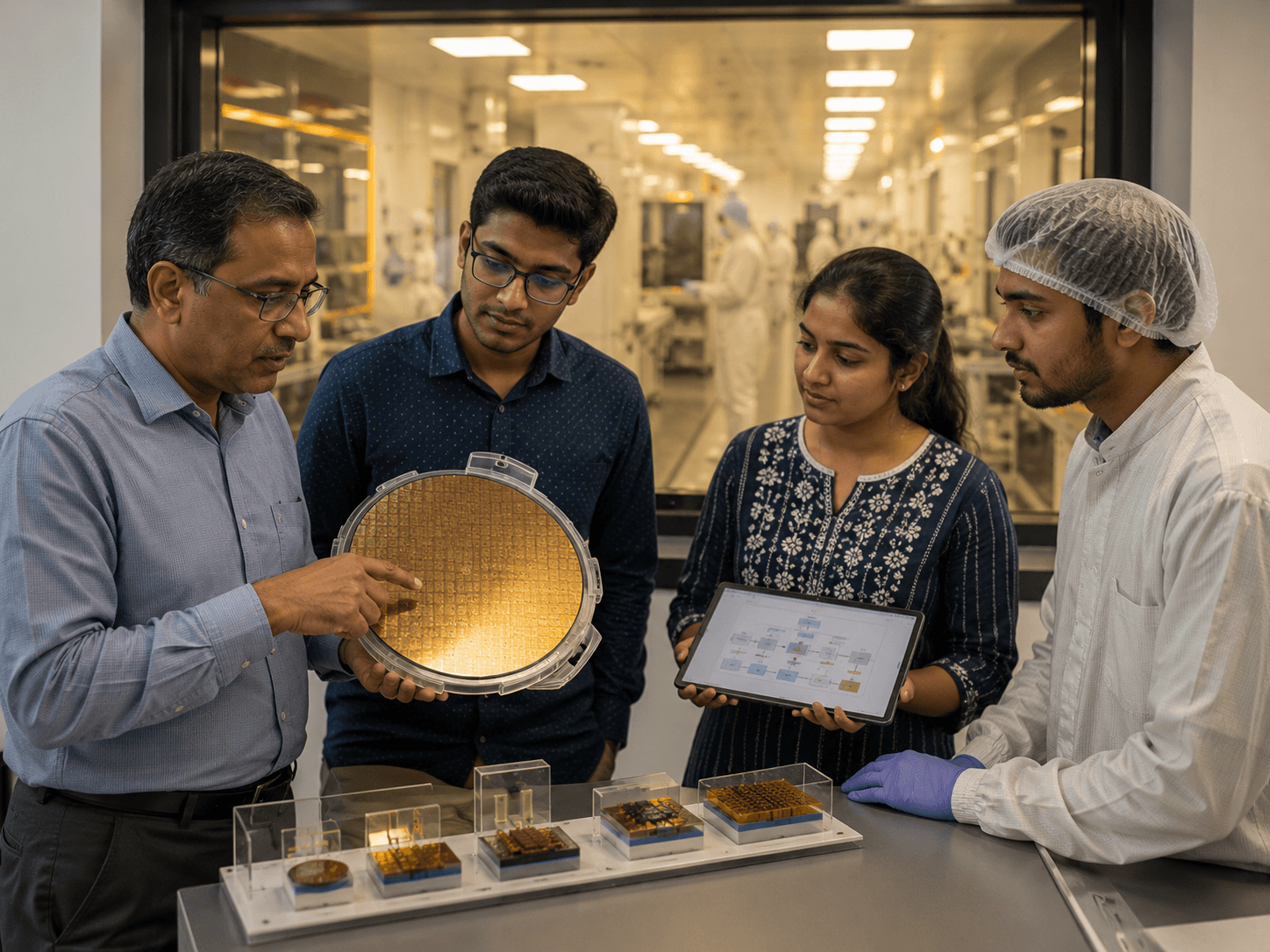
Beat 11 · Fab-aware literacy
Manufacturing literacy connects classroom theory to how wafers move — deposition, etch, yield, packaging — without pretending every student stands inside a foundry. Fab modules make process rules tangible before tape-out season.

Beat 12 · Collaborative ecosystem
The closing beat is invitation — researchers, fabs, funders, and founders in one governed corridor choosing continuity. ChipOS reads as infrastructure worth joining: calm, auditable, and worthy of the silicon futures India is betting on.
Researchers, industry, academicians, innovators, and entrepreneurs belong in the same corridor — not as logo slides on a conference banner, but as roles with custody, export-aware access, and evidence that survives accreditation and funding reviews. That is how India's silicon ambition becomes repeatable talent, not heroic one-offs.
Explore ChipOS·Architecture·Mission Control
ChipOS · Operations
Mission Control
Lab observability adapted from serious systems operations — toolchain health snapshots, queue posture, stalled jobs, and audit trails leadership reads without SSH archaeology.
Unified operational story
Simulation queues · PDK refresh posture · seat utilization · batch job failures · tape-out readiness · import pipelines · audit exports — calm language, no fake fab HUDs.
Mission Control is how HODs and lab leads prove the program is awake — not merely collecting assignments. It pairs with ChipOS provisioning so new cohorts and PDK drops stay deliberate.