 Gatkul
 AstrOS · Narrative
About
Colleges and research groups deserve infrastructure as ambitious as their launch dreams. AstrOS is Gatkul’s operating layer for aerospace education and research—mission planning, telemetry, compliance, and collaboration in one stack so students learn, professors mentor with evidence, and teams deploy real flight programs.
- Mission engineering, not poster projects. Students work with artifacts—interfaces, test evidence, and review discipline—that portfolio and industry screens recognize.
- Collaboration with custody. Multi-site teams, export-aware access, and shared timelines—ambition without file-drop archaeology after every review.
- Deploy with defensible lineage. From lab bench to launch window, the same mission thread feeds Mission Control—flight-readiness is a state, not a story you retrofit.
AstrOS · Campus to orbit
Learn, collaborate, and deploy ambitious space projects
Colleges and research groups should not trade inspiration for rigor. AstrOS is where students practice real mission engineering—requirements, interfaces, test evidence, and review gates—while professors and lab leads keep custody, compliance, and collaboration in one workspace for cubesats, balloons, sounding rockets, and flight-test programs.
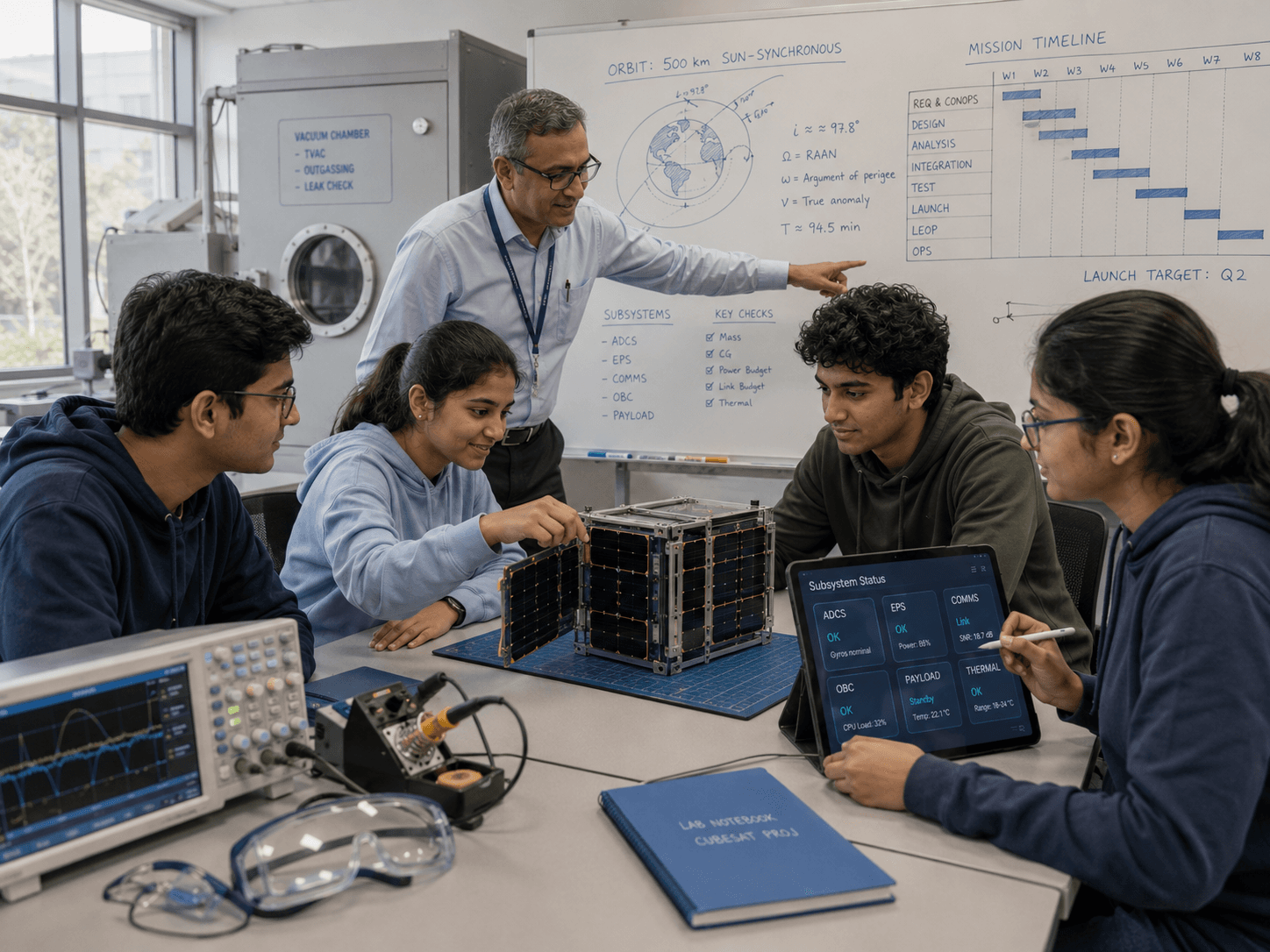
Beat 9 · Learn
Structured curricula meet hardware on the bench—link budgets beside solar panels, test cards on racks, and students who know why a requirement exists before they chase a demo.
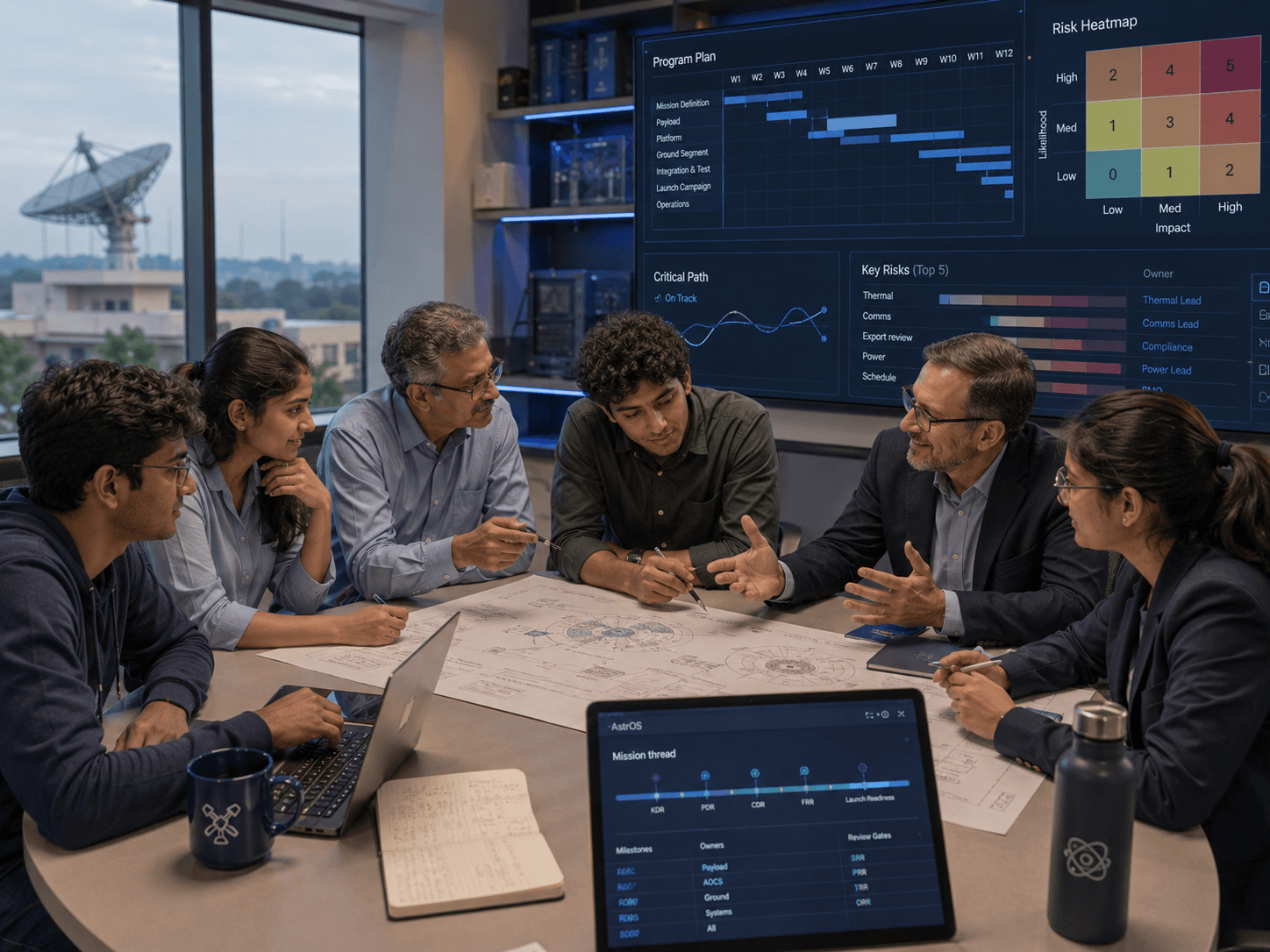
Beat 10 · Collaborate
Campus teams, partner institutes, and mentors read the same mission thread—milestones, risks, and review gates replace duplicate slide decks in competing drives.
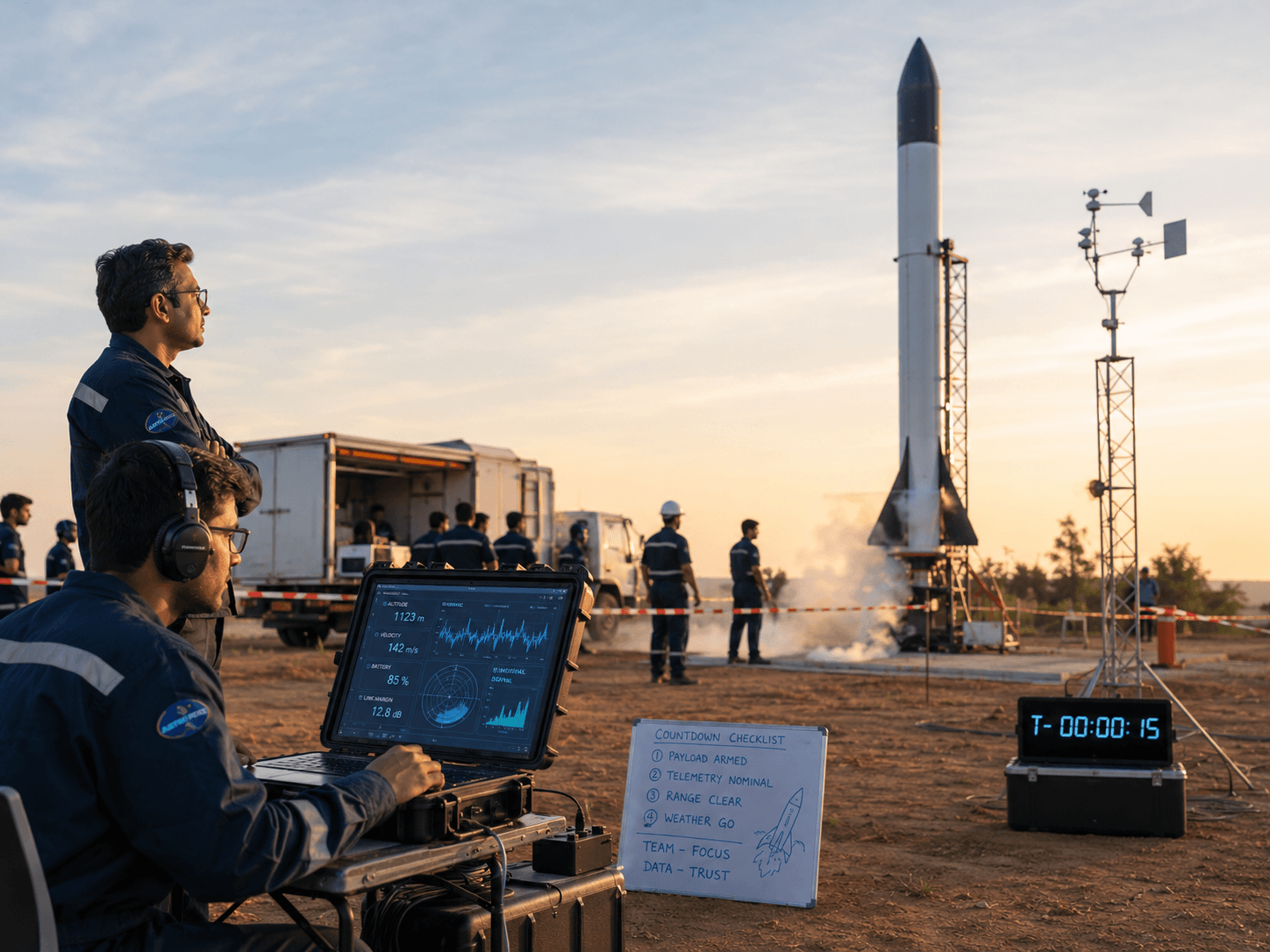
Beat 11 · Deploy
Integration bays and dress rehearsals give way to launch or flight-test day—telemetry students can explain line by line, with lineage that survives the review board.
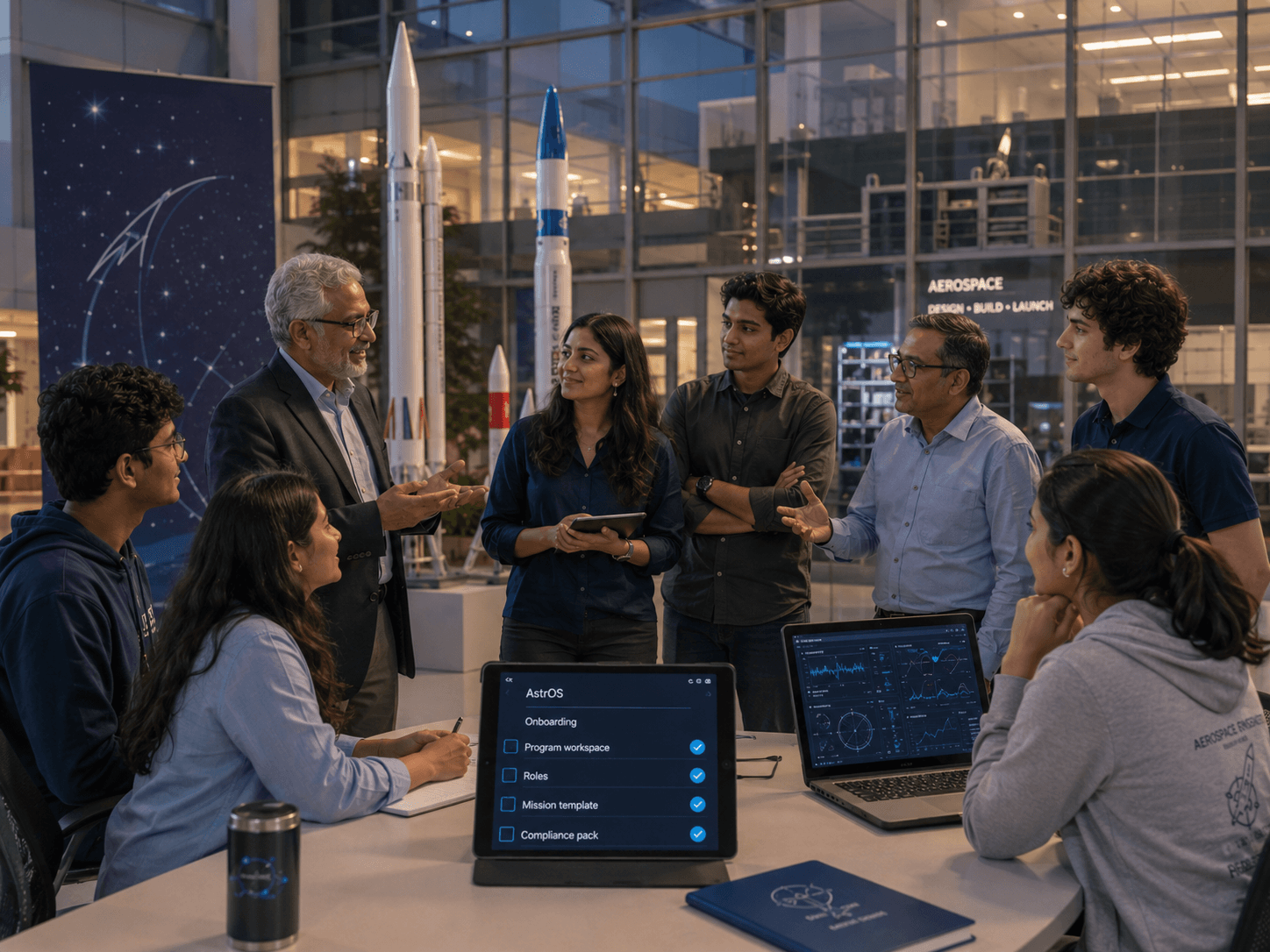
Beat 12 · Onboard together
Deans, lab directors, professors, and student leads choose a platform worthy of their ambitions—one onboarding, then evidence and momentum for every mission that follows.
Onboard AstrOS when your launch dreams need infrastructure to match: portfolio-grade student work, traceable mentorship for faculty, and programs accreditors and industry partners can inspect. Learn the craft in the lab, collaborate across institutes, deploy with evidence—then plan the next window together.
Explore AstrOS·Mission & telemetry modules·Architecture
AstrOS · Operations
Mission Control
Operations language adapted for launch cadence — posture snapshots, anomaly queues, and recovery-aware states that leadership can inspect without standing in a control room.
Unified operational story
Mission calendar · readiness gates · custody transfer · bulk updates · audit trails · incident queues · restore posture · import pipelines — expressed with calm typography, not fake mission-control theater.
Mission Control is how program leads prove the organization is synchronized — not merely sharing documents. It pairs with AstrOS provisioning so onboarding new sites or partners stays deliberate.